Mechs vs Kaijus Ragdoll Kaiju Waves from the Sea
Spawn pressure, destructible districts, and survival habits that protect your checkpoint push.
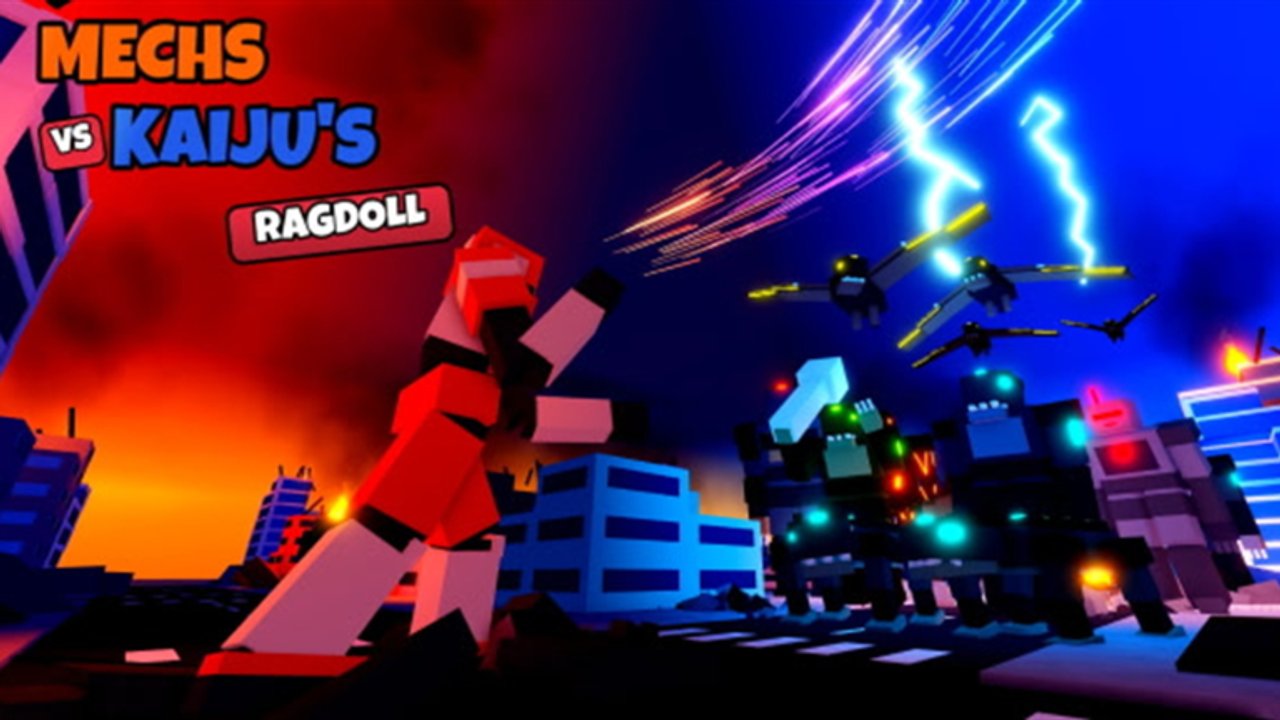
Kaiju waves are the enemy half of Mechs vs Kaijus Ragdoll. Monsters climb out of the sea, slam into a destructible coastal city, and force ragdoll mechs to grab, throw, and smash before the district becomes unusable rubble. Understanding wave pressure is as important as memorizing mech abilities on the Mechs Roster. This page explains what to expect from the shoreline, how destruction changes the fight, and which habits keep squads alive long enough to unlock checkpoints.
Operational how-tos (pit crew timing, wave 10 → start-at-5) live in Wave Survival. Execution details live in Combat Tips. Use this article for threat context and map mindset.
The fantasy in one paragraph
Mechs vs Kaiju Studios pitches the loop plainly: kaiju are coming out of the sea; you pilot a giant ragdoll mech; you punch, grab, throw, and smash them through buildings as the city breaks. Matches get their own servers, friends can run private sessions, and the roster of kaiju pressure scales across a run. Your job is not to “win a lane” in a MOBA sense — it is to manage a rising tide while the arena itself collapses.
Sea spawns and the shoreline problem
Kaiju enter from the waterline. That creates a funnel:
- Early on, the funnel is farmable — short walks from spawn to first buildings.
- Mid run, multiple bodies stack at the funnel while previous kaiju still thrash inland.
- Late run, fighting on the shoreline becomes a wipe magnet because new spawns arrive behind you while you finish old ones.
Habit: Contest the shore briefly, then pull targets toward standing architecture. The sea is a faucet; do not live inside the faucet.
Destructible city as friend and enemy
Buildings are:
- Damage multipliers when you throw kaiju through them.
- Cover and separation tools when overlaps get messy.
- Finite resources — once a block is dust, throw angles vanish and ranged kits gain value.
Squads that nostalgically defend a flattened plaza lose twice: no geometry, and bad spacing. Migrate together when a district dies. Call new throw targets out loud on private match servers until it is automatic in public.
Pressure curve across a run
Think in three bands:
Early waves
- Learn spawn cadence and which facades break cleanly.
- Practice grab quality on Black Alpha or your comfort melee (Controls).
- Do not spend every cooldown; build stamina discipline.
Mid waves
- Expect overlaps — two or more kaiju demanding attention.
- Bravo Guardian snares become premium (Mechs Roster).
- First major repair windows appear; use pit crew before you are one hit from down.
Deep waves
- Geometry may be shredded; Coyote Tangle / Striker-style plasma peel matters more.
- Checkpoint math matters: surviving to wave 10 unlocks start at wave 5 later (Wave Survival).
- Ego shoreline plays delete runs that were otherwise free.
What kaiju force you to do differently than PvP fighters
Even though mechs can collide with each other in chaotic lobbies, the PvE wave design rewards:
- Target priority over duel pride.
- Throw setups over infinite combos in empty streets.
- Role coverage (bruiser / control / peel) over six identical highlight kits.
- Repair discipline over highlight clips at 5% health.
If you come from anime battlegrounds muscle memory, deliberately unlearn “always chase the kill.” Chasing into the sea pack is how 24-player lobbies cascade into wipes.
Squad habits that counter waves
- Caller — one person announces new shoreline spawns.
- Controller — Guardian (or equivalent) snares the priority body.
- Converters — Alpha / Tsunami / Dagger turn the snare into throws and finishers.
- Peel — Coyote / Striker clear stacks off anyone rotating to pit crew.
- Migrate on rubble — whole group moves; no lone heroes in dead blocks.
These habits matter more than owning every S-tier letter on the Mechs Tier List.
Private matches as kaiju classrooms
Private match servers let friends:
- Rehearse pull routes from shore to warehouse districts.
- Practice throwing the same kaiju into the same facade ten times.
- Simulate “city already gone” by fighting in pre-broken zones on purpose.
- Teach new pilots not to stand in the spawn faucet.
Then take the plan public for scrap volume (Scrap and Packs).
Reading the environment mid-fight
Ask three questions every thirty seconds:
- Where is the next sea spawn?
- Which buildings still accept a throw?
- Who on the squad is cracked and needs pit crew cover?
If you cannot answer, you are tunnel visioning a single kaiju corpse. Camera up, then re-engage.
Economy link — waves pay for the garage
Kaiju waves are also your scrap engine. Cleaner deep runs fund packs, which unlock roster options, which make the next deep run easier. Codes add bursts (Codes), but they do not replace survival skill. Boost windows should be spent on focused wave pushes, not lobby AFK.
Common misunderstandings
- “The kaiju are unfair.” Often the city is gone and the squad never migrated.
- “We need more damage.” Often you need a snare and a repair.
- “Shoreline farming is optimal.” Until overlaps arrive — then it is a trap.
- “Respawns fix everything.” Faster respawns help, but deaths still drop bodies during the exact spike that ends the run.
Related reading
- Wave Survival — checkpoints, pit crew, session plans.
- Combat Tips — throws and ability timing.
- Mechs Roster — tools you bring to the shore.
- Players Hub — roster category.
- Getting Started — if you are new to the loop.
Kaiju waves are the clock and the teacher. Respect the sea funnel, spend the city while it stands, repair before you break, and let checkpoint progress turn scary deep runs into your normal farming route.
Frequently Asked Questions
Quick answers for Mechs vs Kaiju's Ragdoll pilots.
Where do kaiju come from?
They spawn from the sea in waves. Contest the shoreline briefly, then pull targets inland toward buildings so you are not fighting on the spawn faucet.
Why does the city matter so much?
Destructible buildings multiply throw damage and create separation. When a district is rubble, migrate and lean on ranged or control kits.
What is the biggest wipe cause on waves?
Overlapping shoreline fights with no pull, no snare, and no pit crew repairs. Stack inland, assign roles, and repair before you are one hit from down.
How do waves connect to progression?
Clearing deep waves earns scrap and pushes the wave 10 checkpoint that unlocks starting later runs at wave 5.
Should I practice kaiju pulls in private servers?
Yes. Private match servers are ideal for rehearsing shore-to-building pull routes and throw targets before public scrap sessions.